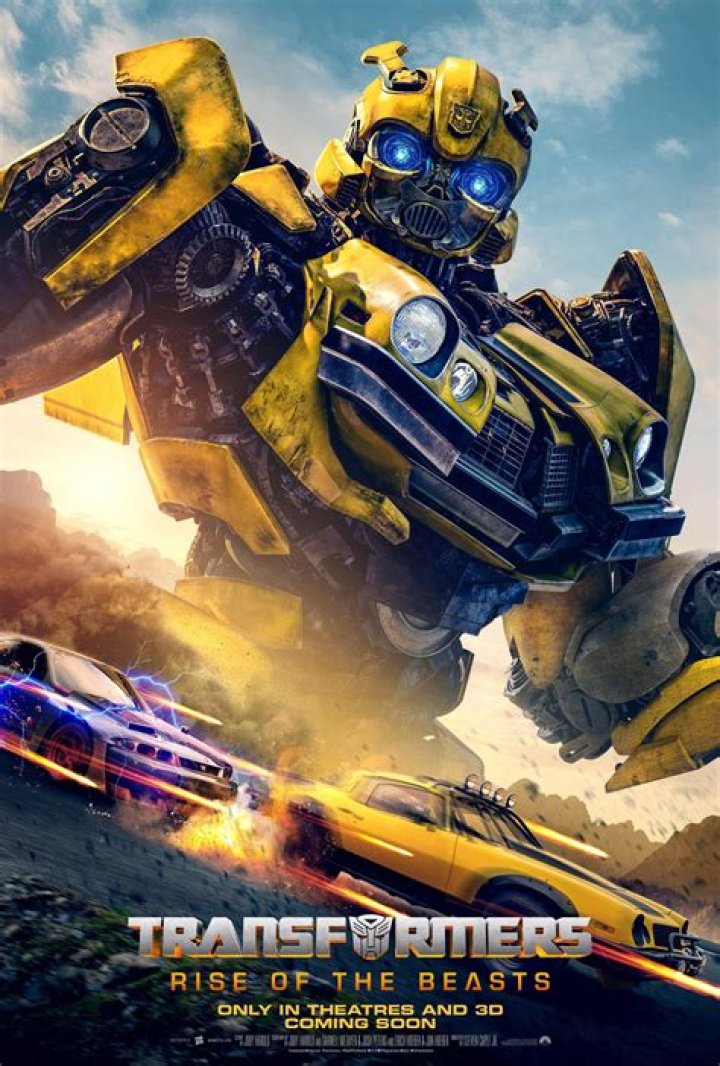
Transformers 7 Using Bumblebee's Trick Is Genius (But Flawed)
 Isabella Ramos
 Bumblebee was a relative success and it looks like Transformers: Rise of the Beasts is taking notice, but perhaps that shouldn't be the case.
Despite the issues with the rest of the Transformers franchise, Bumblebee was a great audience and critical success, largely thanks to a trick that the upcoming Transformers: Rise of the Beasts seems to have learned from, for better or worse. Despite only being a modest success as Transformers movies go, Bumblebee managed to stand out from its predecessors in everything from style to tone, also striking a balance between telling an engaging story of its own and being respectful to the source material. However, beyond its overall innovative approach to adding to the Transformers series, there was one thing in particular that set the movie apart.
Beginning with 2007's Transformers, the Michael Bay-directed blockbuster drew a considerable amount of praise for its break-neck action and special effects. However, successive installments have attracted significant criticism, with many labelling the series as increasingly messy, boring and loud. Many of the aspects of the first film were inflated in the subsequent movies. The relatively sophomoric sense of humor, increasingly messy and cluttered action sequences, and convoluted plots all resulted in the Transformers franchise drawing more and more critical ire and a gradually declining box office. Then Bumblebee came along and rebooted the franchise, revitalizing the project.
Despite no direct sequel to Bumblebee being announced, its success made it only natural that future Transformers films would attempt to emulate it. The gimmick that allowed Bumblebee to work beyond mere brand recognition was entirely down to its setting - specifically its time period. This is something the impending seventh Transformers movie seems to have recognized, though there's the question as to whether or not the movie truly understands why that gimmick worked so well in Bumblebee's favor.
Why Bumblebee Was More Successful Than The Other Transformer Movies
One of the biggest factors of Bumblebee's success was its late 80s time period, differentiating it from the previous movies by setting it in a less modern environment. This worked heavily in its favor as it allowed Bumblebee to have a charm intentionally reminiscent of 80s buddy movies like E.T. the Extra-Terrestrial for a decent portion of the film, while also keeping the film relatively simple and giving the human companions more weight than in the past. At the same time, the more obvious benefit was that the new time period allowed the movie to play to the roots and lore of the franchise, running with the fact that the source material got its start in the 80s. All of this heavily contrasted the pre-reboot franchise's tendency to disregard Transformers lore almost entirely and reduce the human characters to increasingly more peripheral comic relief.
The setting also has another oft-overlooked effect. It allows for the themes of the narrative to really take root. This late Cold War period was the perfect environment for a series that revolved around highly technologically advanced foreign entities, hiding among the population. That Cold War tension is the driving force behind much of the conflict in Bumblebee with the US military, as they're primarily motivated by the paranoia instilled by Russia. While the Cold War setting isn't especially prominent outside of this detail, it does help the film to feel more cohesive as a whole.
Transformers 7 Is Smart To Borrow Bumblebee's Time Period Trick
Already it looks as though Transformers: Rise of the Beasts is going to be following in the mold of Bumblebee, if not directly following its events, as the film is supposedly set in the 1990s. It's a wise decision as it will allow the movie to pay homage to other films of the era and play on how the themes of the Transformers series might play into the sensibilities over that time period, once again making the story feel more whole and potentially making the human characters more fleshed out than in past movies, telling stories about how encounters with these giant robots affect the people and vice versa.
Because of the way Bumblebee ended - having the eponymous yellow Autobot leave Charlie at the film's conclusion - any future movies following this line of thinking avoid the major issue of a consistent human cast tethering the film to a certain time frame. Any further films in the franchise can therefore also take place around the same time period without the need to worry about the actors' ages giving things away. Or they can take place at various points throughout history. Transformers live for millions of years, after all. This, in theory, should be perfect for the next Transformers movies. However, this creative decision is also a double-edged sword specifically for the one it seems they're primed to do.
Beast Wars Is Still Continuing Transformers Biggest Problem
There are considerable pitfalls with Transformers: Rise of the Beasts attempting to copy Bumblebee's period gimmick. The most notable of these is that it's perhaps the one era of the Transformers animation that makes the least sense to apply it to, effectively continuing the biggest problem with the franchise - a disregard for lore in the interest of inserting human characters where they don't need to be.
Beast Wars: Transformers began in 1996 with its Beast Machines sequel following it in 1999. The problem is that the plot of that series revolves around future descendants of the Autobots and Decepticons traveling to the past. Specifically, they travel to a primitive Earth. In this era, there technically were no humans. The robots carried the entire storyline on their own. The fact that the upcoming movie will take place in the 90s is a drastic deviation from the original source, on its own. As is the presence of Optimus Prime, Bumblebee, and other big-name characters. Beast Wars was a series carried by an entirely new cast. Unfortunately, neither cinematic continuities so far would really fit with the idea as in both versions, the fan-favorite transformers arrive on Earth in the modern age, rather than crash-landing thousands of years ago and being dormant for millennia.
These deviations are indicative of the series' seeming reliance upon human characters and big-name robots. Without a doubt, these decisions were made in the interest of marketability. Studios want to see human faces, preferably highly recognizable ones to help sell the movie. This is supercharged in large franchises like this, where there are longstanding popular non-human characters like Optimus and Bumblebee. It results in considerably less risk than having to rely on a full roster of relative unknowns. This would have been the perfect opportunity for the franchise to break away from that problematic trend by more closely adhering to the source and therefore not choosing to rely on human characters, however, it seems that despite Bumblebee creating the template, Transformers: Rise of the Beasts is primed to continue this worrying pattern for a whole new trilogy.
Next: Unicron Is Rise Of The Beasts' Villain - Transformers 7 Theory Explained