The Green Inferno's Ending Moral Is RIDICULOUSLY Misguided
 Charlotte Adams
 The Green Inferno tries to leave viewers with a moral lesson, but when subjected to any kind of scrutiny, that lesson is entirely ridiculous.
Eli Roth's The Green Inferno tries to leave viewers with a moral lesson, but when subjected to any kind of scrutiny, that lesson turns out to be absolutely ridiculous. In the 1980s, Italian horror was a booming business, with directors like Dario Argento, Lucio Fulci, and Lamberto Bava churning out classic film after classic film. One crucial thing Italian horror had over most of the films produced in America at the time was a willingness to create content that was as sleazy and raw as possible, hitting viewers with extremely graphic gore, rampant nudity, and on-screen depravity.
Like American horror, Italian horror also contains specific sub-genres that proved popular in the 1980s, with perhaps the most infamous being the cannibal film sub-genre. Often set within the jungle, these films depict western characters that end up on the menu for remote tribes that are all too happy to turn prospective trespassers into carcasses for consumption. This is one sub-genre that quite rightly rarely gets explored nowadays, however, as the setup is ripe for racially insensitive or offensive depictions of indigenous peoples.
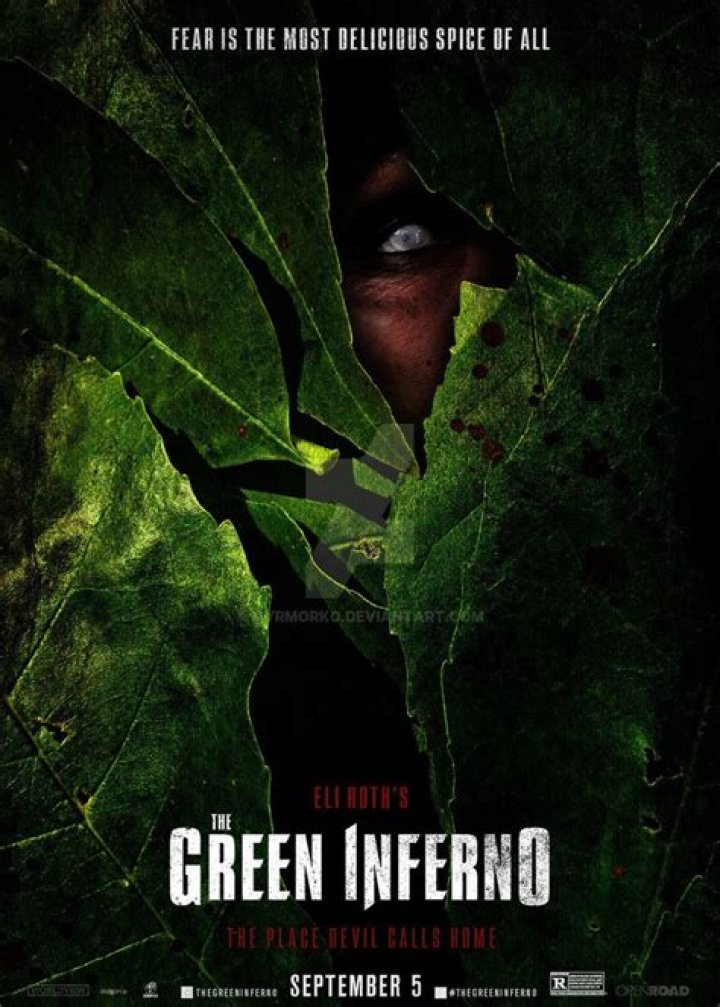
Of the many films that comprised the 1980s Italian cannibal movie boom, the most famous is Cannibal Holocaust, which was released at the start of the decade. In Cannibal Holocaust, characters head into the jungle to make a documentary called The Green Inferno. Thus, noted horror fan Eli Roth used that title for his 2015 tribute to the sub-genre. The resulting film has a lot of positives, but its ending, especially its apparent message, leaves much to be desired.
The Green Inferno's Ending Moral Is RIDICULOUSLY Misguided
The Green Inferno centers on a group of college activists who head into the Amazon jungle to stage a protest against a petrochemical company operation. This operation is known to be destroying rainforests and displacing native tribes that have lived without contact with the outside world for generations. On the flight back, their plane malfunctions and crashes, and the survivors are captured by one of the very tribes they sought to defend. Unfortunately, this tribe is full of cult cannibal-style villains who proceed to brutally kill and eat most of the group. Eli Roth shows the deaths in excruciating detail, and as a horror piece, The Green Inferno succeeds by delivering shock-value-gore and scares.
In The Green Inferno's penultimate scene, the lead character Justine (Lorenza Izzo) manages to escape the tribe and ends up in the middle of a huge battle between the petrochemical company's militia force and the cannibalistic natives. She's able to identify herself as an American to one of the militiamen and manages to escape back to the US. This is where Roth's film stretches credibility, however, as back in the movie's little time spent in New York City, Justine lies and says that she was the only survivor of the plane crash and that the natives helped her to safety, before being unfairly wiped out by the militia. This follows multiple shots of the battle between the company and the tribe that seems to want to make the viewer sympathetic to the cannibals that just butchered and ate a group of innocent explorers.
The Green Inferno's message, therefore, appears to be that the native tribes were in the right to do what they did, due to their way of life being intruded upon. It also seems to go a step further and argue that they're more moral than a selfish, civilized society, whether pointing the finger at ill-informed activists or petrochemical mercenaries alike. Of course, the controversial Green Inferno's message glosses over the fundamental fact that this tribe consumes innocent people, in some cases dismembering them while they're still alive and screaming.
In this way, Justine's decision to protect The Green Inferno's tribe and paint them as nice is wildly irresponsible, as the next people who encounter these supposedly benevolent natives will be in for a rude awakening while dishonoring the memory of the people that were killed. While respecting the rights of remote tribes to remain undisturbed is undoubtedly a poignant message, The Green Inferno's subsequent decision to paint these cannibals as morally superior to civilization is laughably misguided and undermines the entire film's horror efforts.